Pass, Pause, Panic: The 2026 Quiz Show Report Card for TV’s Accidental Comedy Heroes
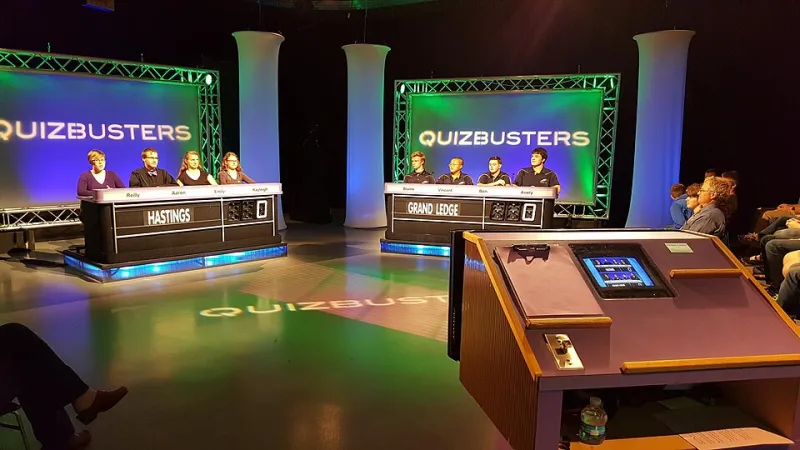
Photo: Joe Ross from Lansing, Michigan, CC BY-SA 2.0, via Wikimedia Commons
There is a moment in every great quiz show when the studio goes quiet, the host smiles a slightly worried smile, and a contestant says something so gloriously unexpected that the clip will be doing the rounds on social media by teatime. In 2026, that moment happened a lot.
This is not a cruel column. It is a love letter to the brave souls who sit under studio lights, hold a buzzer and discover that their brain has chosen this exact moment to leave the building. British viewers do not watch quiz shows just for the answers. We watch for the people.
A quick note: the moments below are composite examples drawn from the year’s quiz-show landscape. The names have been changed, the details have been blurred, and the spirit of magnificent confusion has been preserved. This is a report card, not a tribunal.
The grading system
We have devised a highly scientific scale for contestant chaos.
- A* – A wrong answer so committed that it briefly becomes performance art. The contestant does not flinch. The host does.
- A – A dramatic pause so long that the audience starts to wonder if the question has been cancelled.
- B – A confident explanation that is worse than the original guess.
- C – A pass delivered with the dignity of someone declining a second helping of cake.
- D – A normal wrong answer. No shame. Everyone has one.
- F – The contestant apologises to the host. We are not here for that. Bring back the chaos.
The Magnificent Wrong Answer
Our first A* goes to the contestant who was asked to name a British river and answered, with total confidence, ‘the M6’. It is not a river. It is a motorway. But for a split second, everyone in the studio considered it. The host paused, nodded slowly and said, ‘I can see why you’d say that.’
That is the energy we are rewarding. It was not just wrong. It was wrong with conviction. It had a certain logic to it. Rivers are long, grey and cause delays. The M6 is long, grey and causes delays. The contestant was playing a different game, and honestly, it sounded more fun.
The Dramatic Pause
There is a fine line between thinking and having a small existential crisis on national television. This year’s A goes to a contestant who was asked a relatively simple question about a 1990s pop group and responded with a silence so profound that the studio audience began to shuffle.
You could see the cogs turning. You could see them stop. You could see the contestant consider their life choices, the question, the buzzer and the possibility of simply walking off set. Then they said, ‘Is it Take That?’ It was not. But the journey was magnificent.
The host filled the gap with a joke. The audience laughed. The contestant laughed. Everyone moved on. This is the British way.
Pass as performance art
Some contestants answer questions. Others treat the word ‘pass’ as a small theatrical event. This year we saw passes delivered with a shrug, a sigh, a nervous laugh and, in one memorable case, a full hand gesture that suggested the contestant was batting away an invisible fly.
Our A* in this category goes to the person who, when asked to name a chemical element, said, ‘Pass – but I’d like it noted that I knew the first letter.’ The host asked which letter. The contestant said, ‘I’ve forgotten.’
That is not a failure. That is a short story. It has a beginning, a middle and a punchline. We would watch a whole series of that contestant explaining things they almost know.
The overconfident explanation
A B grade feels harsh for this one, because the confidence was so beautiful. A contestant was asked a geography question and gave an answer that was not only wrong but was followed by a detailed explanation of why it was right. The host let them finish. The audience let them finish. The answer did not improve.
There is something very British about this. We do not like to admit we are wrong. We would rather double down, add a fun fact and hope everyone forgets the original question. It is not big and it is not clever, but it is deeply relatable.
Why we adore a glorious loser
Quiz shows are supposed to be about knowledge. But the ones we remember are about nerve. A contestant who knows everything is impressive. A contestant who guesses wildly, pauses dramatically and then apologises to the host is entertainment.
Part of it is recognition. We have all been asked a simple question and forgotten the answer. We have all said something stupid with total confidence. We have all wanted to press a buzzer and then thought better of it. The quiz show contestant does it in front of millions, and somehow survives.
Part of it is the British love of an underdog. We like people who have a go. We like people who are not slick. We like people who laugh at themselves. The quiz-show contestant who turns a wrong answer into a small piece of theatre is not failing. They are giving us a gift.
The final report card
So, to the 2026 quiz-show contestants who passed, paused, panicked and pressed the buzzer anyway: we salute you. You made teatime telly feel like a shared experience. You gave us clips to send to group chats. You reminded us that being wrong in public is not the end of the world.
Our overall grade for the year is an A*. Not because the answers were good. Because the humans were.